How to Prepare for Your First Overnight Adventure
Your first night outdoors is something you might remember for years. There’s the excitement of packing your kit, choosing somewhere to stay, setting up camp and imagining what it’ll be like to spend an entire night away from the comforts of home.
But there’s probably a little uncertainty mixed in with that excitement, too.
Will you have everything you need? What if it rains? Will you actually manage to sleep? And how do you know whether you’re properly prepared?
The good news is that your first overnight adventure doesn’t need to involve expensive equipment, complicated survival techniques or travelling deep into the wilderness. In fact, keeping things relatively simple is often the best way to begin.
With a little preparation, a sensible choice of location and an understanding of the basics, you can give yourself a much better chance of enjoying your first night outdoors.
This guide will help you prepare, avoid some common beginner mistakes and build the confidence to spend your first night under the open sky.
Table of Contents
1. Start With a Realistic Plan
One of the biggest mistakes beginners make is trying to do too much on their first overnight adventure.
It’s easy to get carried away watching videos of people spending weeks in remote woodland, building elaborate shelters and cooking everything over an open fire. While those adventures can be inspiring, they’re not necessarily the best starting point.
Your first overnight trip should be about becoming comfortable outdoors, learning how your equipment works and discovering what you enjoy.
You don’t need to walk 20 miles, carry everything you own or prove anything to anyone.
A simple overnight stay somewhere familiar, accessible and legally suitable for camping is an excellent place to start.
Think about what you actually want from the experience. Perhaps you’d like to practise setting up a tarp, cook a meal outdoors, learn to navigate or simply enjoy an evening away from everyday distractions.
Having a few realistic goals will help you decide what to bring and how to organise your trip.
A useful first-time approach: Choose somewhere relatively close to home, plan a short journey, arrive with plenty of daylight remaining and give yourself enough time to get everything organised without rushing.
2. Choose Somewhere Suitable to Stay
Where you spend your first night can make a considerable difference to your experience.
You might picture yourself finding a quiet woodland clearing, listening to the wildlife and watching the stars through the trees. It’s a wonderful image, but finding somewhere suitable isn’t always as straightforward as it appears.
In the UK, you cannot simply assume that woodland, open countryside or a quiet-looking field is available for overnight camping.
Land access, ownership, local restrictions and permissions all matter. Wild camping rules vary across the UK, and even in areas where it is traditionally tolerated, there may be restrictions or expectations to follow. In England and Wales, you should obtain permission from the landowner unless a specific right or arrangement allows you to camp.
For your first trip, a recognised campsite or a permitted camping location is often the easiest option.
Look for somewhere that offers:
- Reasonable access without a demanding walk.
- Suitable, level ground for your sleeping equipment.
- Access to drinking water or the ability to bring your own.
- Facilities appropriate to your experience.
- A location where you can practise your skills without disturbing others.
Don’t overlook the importance of choosing somewhere familiar. If you’ve walked an area before, you’ll have a better idea of the terrain, access routes and surroundings.
You can always venture further afield as your confidence grows.
3. Check the Weather Before You Go
British weather has a habit of making outdoor plans more interesting than expected.
A pleasant afternoon can turn into a wet evening, temperatures can drop considerably after sunset and a light breeze can become uncomfortable when you’re sitting still.
Checking the forecast before leaving is essential, but don’t just look at the daytime temperature.
Pay attention to the expected overnight low, rainfall, wind speed and direction, and any weather warnings.
Your campsite might feel perfectly comfortable when you arrive, but conditions can be very different several hours later.
It’s also worth thinking about how the weather affects your chosen location. Low ground can collect water, exposed areas can become uncomfortable in strong winds and some paths become difficult to negotiate after heavy rain.
If conditions are unsuitable for your experience or equipment, postpone the trip. There’s no shame in changing your plans.
Your first overnight adventure should be enjoyable, not an unnecessary test of endurance.
4. Get Your Sleeping Equipment Right
Getting a comfortable night’s sleep is one of the most important parts of your first overnight adventure.
You might assume that a sleeping bag is all you need, but the ground beneath you can make a surprising difference.
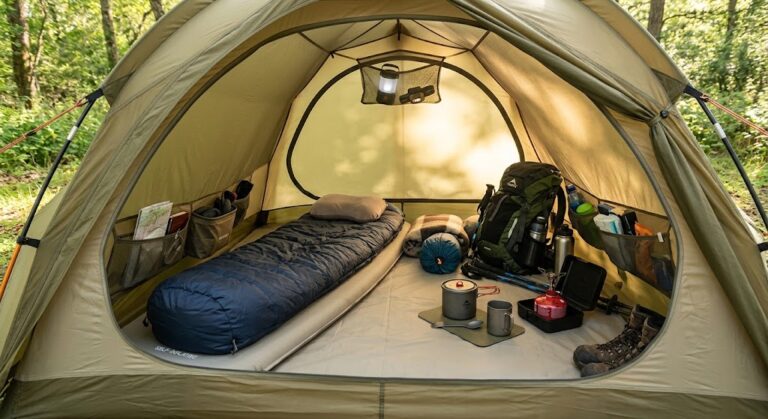
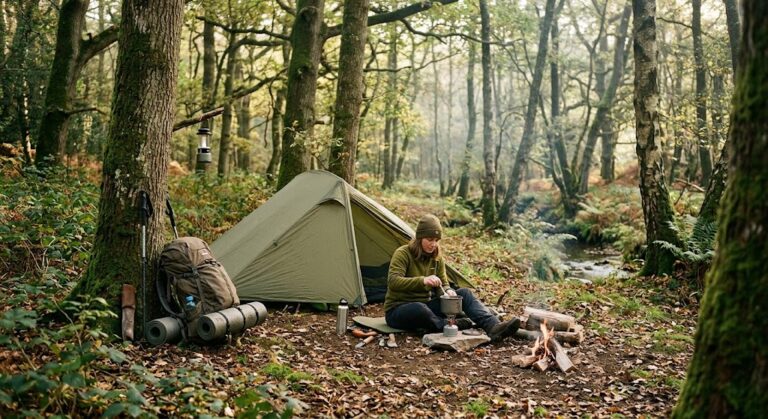
Your basic sleeping setup should include a suitable shelter, sleeping bag and sleeping mat.
Shelter
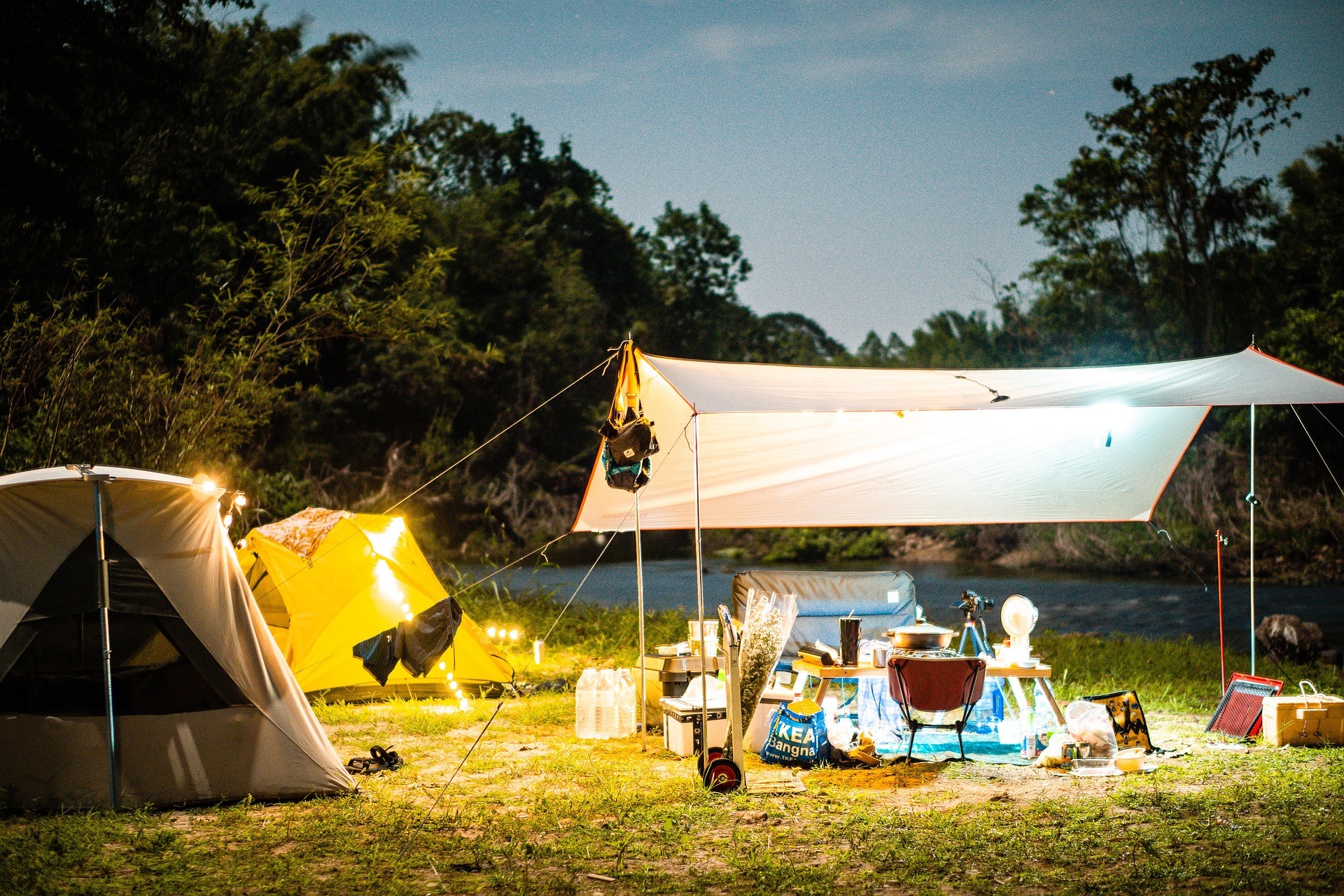
A tent is often the simplest option for a first overnight stay. It provides protection from rain and wind, gives you somewhere to store your equipment and offers a familiar enclosed space.
A tarp can be an excellent alternative, particularly if you’re interested in learning bushcraft skills. However, it requires more thought when choosing a location and setting it up correctly to provide adequate protection.
Sleeping bag
Choose a sleeping bag suitable for the expected overnight temperatures.
Pay attention to the manufacturer’s comfort rating rather than relying solely on its extreme temperature rating. A bag rated for conditions colder than you expect is generally a sensible choice, provided it’s appropriate for your intended use.
Sleeping mat
A sleeping mat does more than make the ground comfortable. It also helps reduce heat loss into the ground beneath you.
Even a reasonably good sleeping bag can feel disappointing if you’re lying directly on cold ground without adequate insulation.
Before your trip, unpack everything at home and practise setting up your sleeping area.
Discovering that you don’t know how to assemble your tent or inflate your sleeping mat while daylight is disappearing isn’t the ideal introduction to camping!
5. Pack the Essentials Without Overloading Yourself
Packing for your first overnight adventure can be surprisingly difficult.
You might find yourself wondering whether you need another jumper, an extra pair of trousers, three different cooking utensils or that piece of equipment you saw someone using online.
It’s tempting to pack for every possible situation, but carrying unnecessary weight can make the journey harder than it needs to be.
Instead, concentrate on the essentials.
|
Equipment |
Why you need it |
|---|---|
|
Tent or suitable shelter |
Protection from the elements |
|
Sleeping bag |
Overnight warmth |
|
Sleeping mat |
Insulation and comfort |
|
Backpack |
Carrying your equipment |
|
Waterproof jacket |
Protection from rain |
|
Warm clothing |
Maintaining body temperature |
|
Spare socks |
Keeping feet dry and comfortable |
|
Headtorch |
Hands-free lighting |
|
Water |
Drinking and hydration |
|
Food and snacks |
Maintaining energy |
|
Cooking equipment |
Preparing meals, if permitted |
|
First aid kit |
Dealing with minor injuries |
|
Phone and power bank |
Communication and emergency backup |
|
Navigation equipment |
Finding your way around |
|
Toilet supplies |
Personal hygiene and responsible waste management |
|
Rubbish bags |
Carrying waste home |
You should also consider taking a spare layer of clothing, a warm hat and gloves if temperatures warrant them.
Keep waterproof clothing somewhere accessible rather than buried at the bottom of your backpack. The same applies to your headtorch, first aid kit and water.
A useful tip is to pack your equipment in groups. Keep sleeping equipment together, cooking supplies together and personal items somewhere easy to find.
This makes setting up camp considerably easier.
6. Plan Your Food and Drinking Water
Food is something many first-time campers underestimate.
After walking, carrying a backpack and spending several hours outdoors, you may find yourself considerably hungrier than expected.
You don’t need to prepare elaborate meals over an open fire. For your first overnight adventure, choose food that’s easy to transport, simple to prepare and familiar.
A straightforward evening meal might include a dehydrated camping meal, pasta or something you can prepare using a small camping stove where its use is permitted.
Breakfast could be as simple as porridge, cereal bars or something you can eat without complicated preparation.
Don’t forget snacks. Nuts, dried fruit, oat bars and other lightweight foods can be useful between meals.
Water deserves just as much attention.
Work out how much drinking water you’ll need for the journey and overnight stay, taking account of the weather and your activity level. If your location has no reliable supply of drinking water, bring enough with you or carry suitable equipment to treat water from an appropriate source.
Never assume that a clear stream or woodland pool contains safe drinking water.
If you’re new to outdoor cooking, practise using your stove at home or in a safe outdoor setting before taking it on your trip.
And remember that open fires aren’t automatically permitted just because you’re outdoors. Follow the site’s rules and local restrictions.
7. Learn a Few Basic Skills Before Leaving
You don’t need to become an expert bushcrafter before your first overnight adventure.
However, learning a handful of useful skills beforehand can make your experience considerably more enjoyable.
Here are five worth practising:
1. Setting up your shelter
Practise pitching your tent or tarp, securing its lines and checking that it provides suitable protection.
2. Tying a useful knot
Learn a knot such as the taut-line hitch, which can help you adjust tension on suitable guy lines.
3. Basic navigation
Learn how to orientate a map, understand basic map symbols and use a compass.
4. Managing your lighting
Practise using your headtorch and make sure you know where spare batteries or backup lighting are stored.
5. Basic first aid preparation
Familiarise yourself with your first aid kit and know how to deal with minor cuts, blisters and other common problems.
These might seem like small things, but they’re the sort of skills that make outdoor experiences easier.
You could even turn each one into a small practice session before your trip.
8. Think About What Happens After Sunset
This is something first-time campers don’t always think about.
During daylight, everything feels relatively straightforward. You can see where you’re going, find your equipment easily and organise your campsite without much difficulty.
After sunset, even familiar surroundings can feel completely different.
Simple tasks such as finding something in your backpack, preparing a drink or walking a short distance to the facilities become more difficult without adequate lighting.
Before it gets dark, make sure your sleeping area is organised.
Keep your headtorch somewhere you can reach without searching through your entire backpack. Put essential items in consistent places and make sure you know where your footwear and warm clothing are.
Think about your toilet arrangements too. If you’re staying somewhere with facilities, familiarise yourself with their location before dark. If you’re in a permitted remote location, understand the local rules for human waste disposal and carry the appropriate supplies.
You might also find that the first night feels a little strange.
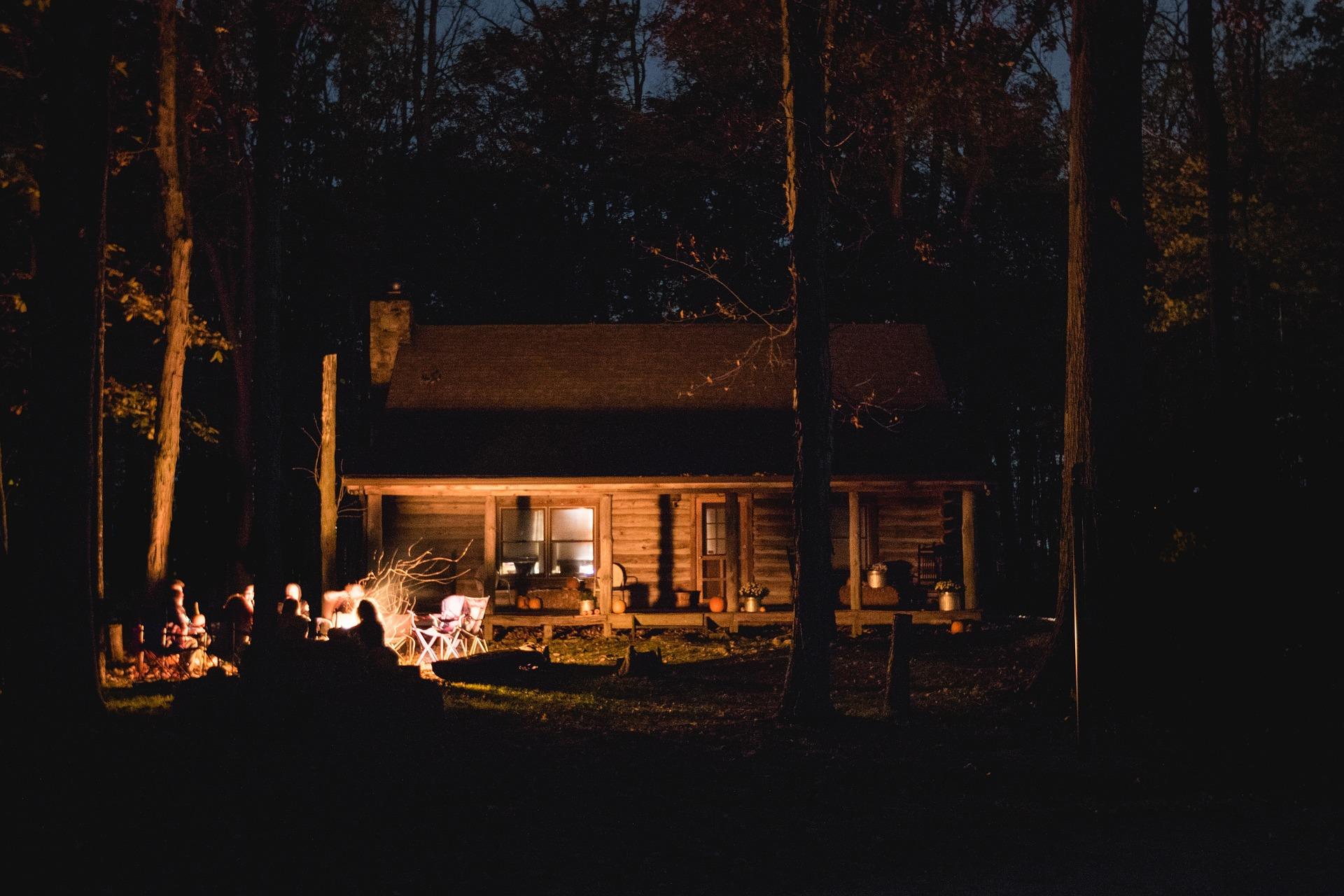
Woodland sounds can seem louder, branches move in the wind and unfamiliar noises can make you wonder what’s happening outside.
That’s perfectly normal.
Give yourself time to settle in, get comfortable and enjoy the experience rather than expecting to fall asleep immediately.
9. Tell Someone Where You’re Going
Even if you’re only planning a short overnight stay, somebody should know where you intend to be.
Before leaving, share your destination, planned route, expected arrival and return times with someone you trust.
If your plans change, let them know.
Make sure your phone is charged and that you understand the limitations of mobile coverage in your chosen area. A power bank is useful, but don’t treat your phone as your only navigation or emergency resource.
If you’re travelling somewhere remote, consider whether additional communication equipment is appropriate.
It’s also sensible to check your route and identify alternative ways to leave the area if conditions deteriorate.
Being prepared doesn’t mean expecting something to go wrong. It means knowing what to do if it does.
10. Set Up Camp Before It Gets Dark
If there’s one piece of advice I’d give anyone planning their first overnight adventure, it’s this: arrive earlier than you think you need to.
Trying to pitch a tent, organise your equipment and prepare food in fading daylight can quickly become frustrating.
Give yourself plenty of time to choose a suitable position, check the ground and get everything organised.
Once you’ve chosen your spot, consider the following:
- Is the ground reasonably level and suitable for sleeping?
- Is there any risk of falling branches or other overhead hazards?
- Could rainwater collect where you’re planning to sleep?
- Is your shelter positioned appropriately for the expected wind?
- Are you following the site’s camping and fire regulations?
Avoid camping beneath dead or unstable branches, in drainage channels or in areas that could flood.
Once your shelter is ready, organise your sleeping equipment, prepare your food and make sure everything you need for the evening is accessible.
You’ll appreciate having a relaxed evening rather than spending it trying to find things.
11. Don’t Forget to Enjoy Yourself
It’s easy to become so focused on getting everything right that you forget why you wanted to go in the first place.
Your first overnight adventure doesn’t need to be a demonstration of survival skills.
Take some time to appreciate your surroundings.
Listen to the birds settling down for the evening, notice how the woodland changes as daylight fades and look for the stars if conditions allow.
You might enjoy preparing a simple meal, reading a book, practising a few knots or simply sitting quietly and taking in the surroundings.
And don’t worry if everything isn’t perfect.
Perhaps your sleeping mat is less comfortable than expected. Maybe you struggle to get your shelter looking exactly how you imagined it, or you realise you’ve packed something you never actually needed.
These are useful lessons.
When you return home, think about what worked, what didn’t and what you’d change next time.
You might discover that you need a warmer sleeping bag, a better way to organise your equipment or simply a little more practice pitching your shelter.
Every trip gives you an opportunity to improve.
Common First-Time Camping Mistakes to Avoid
Even with good preparation, there are a few mistakes that can make an overnight adventure unnecessarily difficult.
Taking too much equipment. Carrying unnecessary items makes travelling harder and can leave you spending more time organising your backpack than enjoying the outdoors.
Not testing equipment beforehand. A new tent, stove or sleeping mat should never be something you’re trying to understand for the first time after arriving at camp.
Underestimating overnight temperatures. Conditions can become considerably colder after sunset. Choose your sleeping equipment and clothing accordingly.
Arriving too late. Setting up camp in darkness creates unnecessary pressure, particularly when you’re unfamiliar with your equipment.
Forgetting small essentials. A headtorch, spare socks, toilet supplies or a rubbish bag might not seem particularly exciting, but you’ll notice their absence.
Trying to do everything at once. Your first trip doesn’t need to involve fire lighting, shelter construction, wild food preparation and advanced navigation. Choose a couple of things to focus on and enjoy the experience.
Ignoring local rules. Always check land access, camping permissions, fire restrictions and environmental responsibilities before setting off.
Your First Overnight Adventure Checklist
Before you leave, work through this checklist to make sure you’ve covered the important things.
Planning
Equipment
Food and water
Before leaving
Frequently Asked Questions
Is one night enough for a first camping trip?
Absolutely. One night is an excellent introduction to overnight camping. It gives you enough time to practise setting up camp, preparing food and sleeping outdoors without committing to a longer trip.
Do I need expensive equipment for my first overnight adventure?
No. You need suitable, reliable equipment, but it doesn’t have to be expensive. Borrowing or hiring some equipment can be a good way to discover what works for you before investing in your own kit.
What should I do if I can’t sleep?
Give yourself time to settle in. Make sure you’re warm, comfortable and have eaten and drunk enough. Familiar surroundings and a comfortable sleeping setup can make a difference. Don’t put pressure on yourself to fall asleep immediately.
Should I build a campfire on my first overnight trip?
Not necessarily. A campfire isn’t essential for enjoying an overnight adventure. Only light one where explicitly permitted, and follow all local restrictions and fire safety requirements. A suitable camping stove may be a more practical option.
Is it better to go alone or with someone experienced?
For a first trip, going with someone who has outdoor experience can be reassuring and gives you an opportunity to learn. If you do go alone, choose an appropriate location, plan carefully and make sure somebody knows your arrangements.
Complete Your First Overnight Adventure
Your first night outdoors is an opportunity to put several different skills together.
You’ll be using your planning, equipment selection, navigation, shelter preparation and outdoor awareness, often without even realising how much you’re learning.
You don’t have to get everything right first time. What matters is preparing sensibly, understanding your surroundings and taking the time to enjoy the experience.
When you return home, you’ll probably have a better idea of what works for you, what you’d change and what you’d like to learn next.
And that’s the real value of getting outdoors.
Every successful adventure, however simple, gives you another reason to head out again.
Start small, learn as you go and let your confidence grow with every night you spend outdoors.
Pure Bushcraft tip: If you’re preparing for your first night outdoors, explore our challenges and Reference Library to build your knowledge before you go. There’s always another useful skill to learn.
🔒Ready to test your survival skills?
Join Pure Bushcraft for free, complete challenges, earn badges and increase your Survival Level.
JOIN FREE →
CRAIG BURR
FOUNDER · PURE BUSHCRAFT
I'm Craig, the person behind Pure Bushcraft. I created Pure Bushcraft because I wanted somewhere people could learn real outdoor skills in a practical, straightforward way — from lighting a fire and tying knots to navigation, campcraft and everything in between.
You can read more about the story behind Pure Bushcraft here as well as our approach here.