
Wild Plant Identification Guide
Explore the Pure Bushcraft plant reference library to identify wild plants and learn more about their characteristics, traditional uses, practical applications and potential hazards. Whether you are a beginner learning to recognise common plants or an experienced bushcrafter expanding your knowledge of the natural world, this library is a useful resource for developing your outdoor skills.
Discover identification features, habitats, seasonal changes, edible and useful plants, poisonous species and important safety information to help you make better-informed decisions outdoors. Use the guides to build your knowledge, improve your observation skills and develop a deeper understanding of the plants around you.
Explore the plants found in the British countryside and learn how to identify them in the wild. Discover their key identifying features, natural habitats, traditional uses, practical bushcraft applications and potential risks, with guidance to help you develop your plant identification skills safely.

Bramble (Blackberry)
Bramble (Rubus fruticosus aggregate) is a widespread British plant recognised by its arching, prickly stems, toothed compound leaves, pale flowers and clusters of blackberries. It grows in hedgerows, woodland edges, scrub and disturbed ground. Its ripe fruit is traditionally gathered for food, while its dense growth provides shelter and food for wildlife. Care is needed when moving through bramble patches or collecting fruit.

Dandelion
The common dandelion (Taraxacum officinale aggregate) is a widespread perennial wild plant recognised by its basal rosette of toothed leaves, bright yellow flower heads and spherical white seed heads. It grows in lawns, meadows, grassland, paths and disturbed ground. Traditionally, its leaves, flowers and roots have been used in food and drink preparations. Dandelions also provide an important source of nectar and pollen for insects.
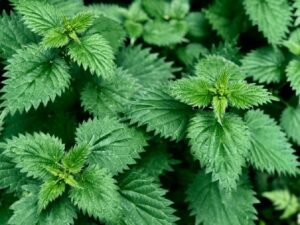
Stinging Nettle
Stinging nettle is a widespread British perennial with pointed, toothed leaves arranged in opposite pairs along upright, hairy stems. It commonly grows in dense patches in fertile ground and produces small, greenish flowers in hanging clusters. It has traditional food, fibre and dye uses, but its stinging hairs can cause painful skin irritation.