Fire Lighting With Matches: Scout Campcraft Guide
Activity Overview
Difficulty: Moderate
Time: 20–30 minutes
Location: Scout campsites and suitable outdoor fire areas
Best for: Cubs, Scouts, Explorers, Patrol Leaders and adult leaders
Skills: Fire lighting, fire safety, preparation, observation and campcraft
Lighting a fire with matches is a basic campcraft skill, but the preparation of the fire is more important than the match itself.
Start with a properly prepared fire area, gather dry tinder and kindling, arrange the fuel so that air can circulate, and only then light the match.
Use matches carefully, keep the fire under control and have the means to extinguish it readily available.
What You’ll Learn
You’ll learn how to prepare and light a small outdoor fire using matches.
You’ll also learn how to strike and use a match safely, how to build the fire so the flame can develop, and how to manage the fire once it has been lit.
🔴 SAFETY – HIGH RISK
Fire can cause serious burns and can spread rapidly if conditions are unsuitable.
Only light a fire where fires are permitted and follow the campsite’s rules.
A responsible person should supervise the activity, particularly with younger Scouts.
Keep matches and flames away from clothing, tents, dry vegetation and other combustible materials.
Have suitable water or other approved means of extinguishing the fire immediately available.
Never leave a fire unattended.
If conditions become windy, very dry or otherwise unsuitable, don’t light the fire.
Equipment
You’ll need a suitable fire area or approved fire container, dry tinder, small kindling and suitable fuel wood.
You’ll also need matches and a safe means of keeping them dry.
Have a suitable supply of water available for extinguishing the fire.
A fire-lighting glove is not a substitute for careful handling, but may be useful where appropriate.
Prerequisites
Before beginning, check that fires are permitted at the site.
Scouts should understand the basic fire-safety rules and know where the fire’s boundaries are.
Prepare the fire area before taking out the matches.
Instructions
1. Check the Fire Area
Use an established fire site where one is provided.
Make sure the surrounding area is clear of unnecessary combustible materials.
Check the wind and weather before starting.
If conditions aren’t suitable, postpone the activity.
2. Gather Your Fuel
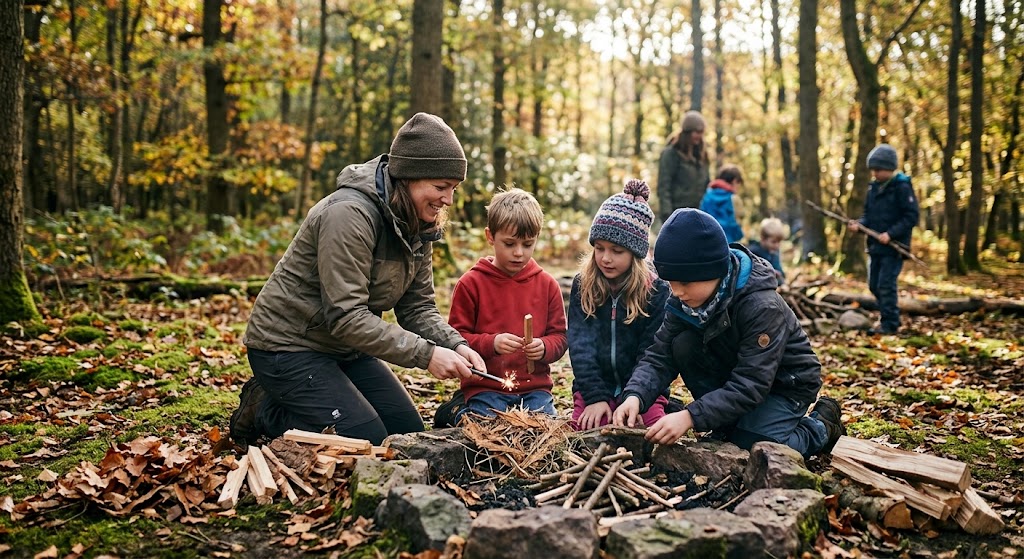
Collect or prepare three basic sizes of material.
Tinder catches the initial flame easily.
Kindling is slightly larger and allows the fire to develop.
Fuel wood is larger and maintains the established fire.
All fuel should be suitable and sufficiently dry.
3. Prepare the Fire Before Lighting
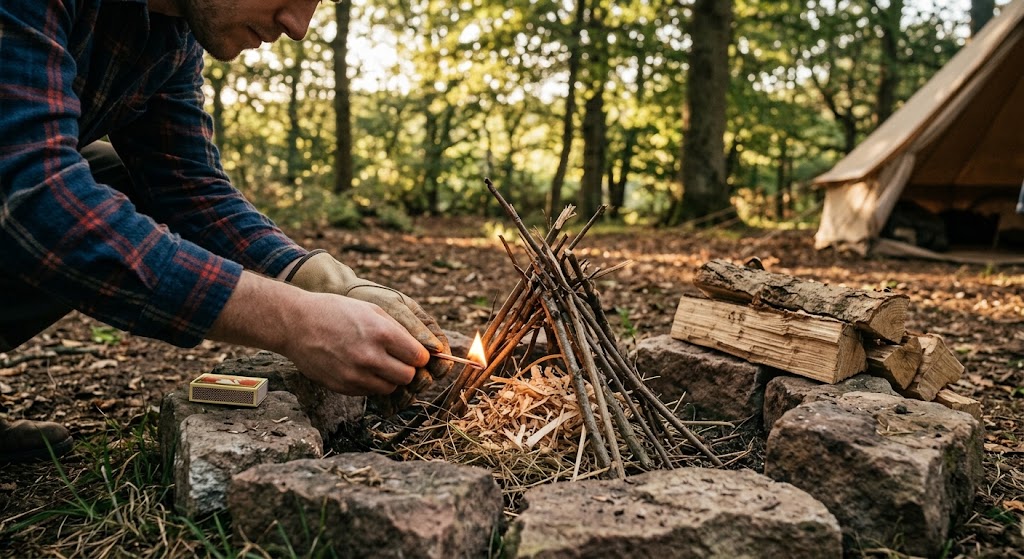
Arrange the tinder and kindling so that the flame can move upwards through the structure.
Leave sufficient gaps for air to reach the fire.
Don’t build an enormous pile of wood and expect a single match to light it.
A small, well-prepared fire is much easier to light and control.
4. Check Your Matches
Keep the matches dry until they are needed.
Take out only what you need rather than leaving the whole box exposed to rain or moisture.
If the matches become wet, replace them rather than trying to use damaged matches.
5. Position Yourself Safely
Kneel or position yourself beside the fire rather than leaning directly over it.
Make sure loose clothing, hair and equipment are kept away from the flame.
Keep other people at a safe distance while the match is being lit.
6. Strike the Match Correctly
Hold the match firmly and strike it away from your body using the striking surface.
Keep your fingers behind the head of the match.
Once it ignites, keep the flame pointed away from your hands and clothing.
Don’t wave a lit match around.
7. Light the Tinder
Bring the match carefully to the tinder.
Place the flame underneath or alongside the tinder where it can catch naturally.
Don’t push your hand into the fire structure.
Once the tinder begins burning, withdraw the spent match safely.
8. Let the Fire Develop
Don’t immediately add large pieces of wood.
Allow the tinder to establish a flame before adding suitable kindling.
Add small pieces gradually so that the fire continues to receive enough oxygen.
9. Add Larger Fuel
Once the kindling is burning strongly, add larger pieces of suitable fuel.
Place them carefully rather than dropping them onto the fire.
Avoid overcrowding the fire.
10. Keep the Fire Under Control
Watch the fire continuously while it is being used.
Keep combustible equipment away from the fire area.
Don’t allow people to run near it or reach across the flames.
If the fire becomes larger than intended, stop adding fuel and manage it according to the site’s procedures.
11. Manage Smoke
Excessive smoke can indicate damp fuel, poor airflow or a fire that isn’t burning efficiently.
Use dry, appropriate fuel and maintain good airflow.
Never add rubbish or unsuitable materials simply to get rid of them.
12. Use the Fire Responsibly
Only use the fire for its intended purpose.
If cooking, make sure cookware is stable and handled carefully.
Don’t use the fire as entertainment by throwing objects into it or deliberately creating large flames.
13. Extinguish the Fire
When you’re finished, extinguish the fire thoroughly according to the campsite’s instructions.
Don’t assume a fire is out simply because there are no visible flames.
Deal with remaining embers and check the area carefully.
14. Check Before Leaving
The fire area should be safe to leave unattended.
Make sure there are no remaining hot embers capable of reigniting.
Leave the site according to its fire-management rules.
Choosing Good Tinder
Good tinder catches a match flame quickly.
Suitable dry natural materials can include dry grass, fine wood shavings and small dry twigs, where collection is permitted.
Commercial firelighters may also be used where appropriate.
The key is dryness and suitability, not simply having a large quantity.
Why a Match Goes Out
A match may fail to light the fire because the tinder is damp, the flame can’t reach suitable material or there isn’t enough airflow.
This is why fire preparation comes first.
If the first match fails, don’t repeatedly strike matches into a poorly prepared fire. Stop, assess the setup and improve it before trying again.
Fire Lighting in Wet Weather
Wet conditions make fire lighting more difficult.
Keep matches and tinder protected from rain and prepare a dry supply of small fuel before striking the match.
Don’t use unsafe amounts of fuel or create an unnecessarily large fire just to overcome damp conditions.
If suitable dry materials aren’t available, the safest option may be not to light a fire.
Fire Lighting With Matches for Younger Scouts
Younger Scouts can learn the principles of fire lighting progressively.
The focus should initially be on fire preparation, safety and supervision, rather than repeatedly striking matches.
As confidence and competence develop, the practical skill can be introduced under appropriate supervision.
Final Tip
A successful fire-lighting exercise is won before the match is struck.
Prepare a small, dry and well-ventilated fire, position yourself safely and use the match carefully. Once the fire is established, keep it controlled and supervised until it has been completely extinguished.
The goal isn’t to light a fire as quickly as possible—it’s to light the right fire, in the right place, safely.
🔒Ready to test your survival skills?
Join Survival Guides UK for free, complete challenges, earn badges and increase your Survival Level.
JOIN FREE →
CRAIG BURR
FOUNDER · SURVIVAL GUIDES UK
I'm Craig, the person behind Survival Guides UK. I created SGUK because I wanted somewhere people could learn real outdoor skills in a practical, straightforward way — from lighting a fire and tying knots to navigation, campcraft and everything in between.
You can read more about the story behind SGUK here as well as our approach here.